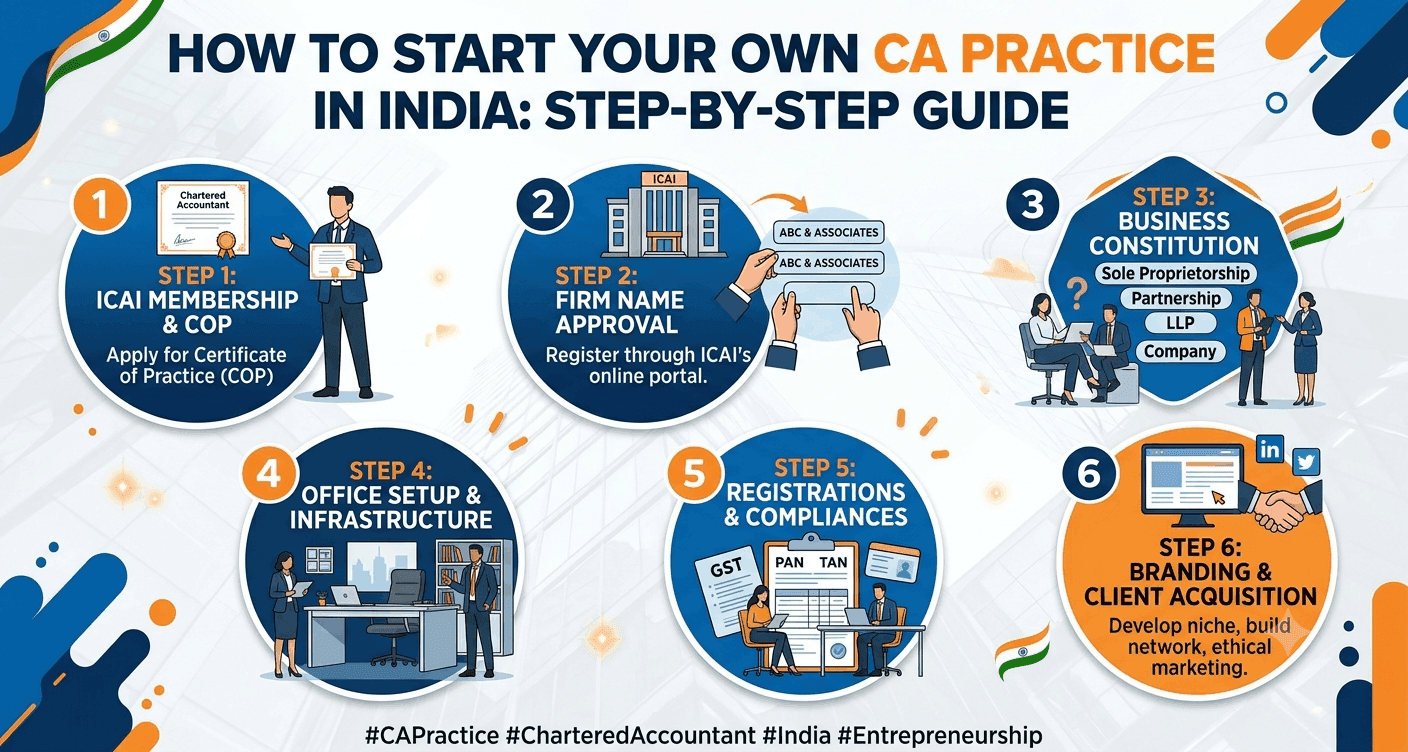
Starting your own CA practice is one of the most ambitious and fulfilling steps a Chartered Accountant can take in their professional journey. As clearing exams is not enough, the real challenge arises when you start your professional journey.
The transition from a student to a working profession is the most important phase in the life of a Chartered Accountant.
A CA practice gives you the opportunity to build your own brand and enjoy financial independence.
Find the right expert, without the hassle.
Connect with verified professionals for tax, legal, and compliance needs.
This guide breaks down how to start CA practice in India step by step, in a practical, experience-based rather than theory.
Who is a Chartered Accountant in Practice?
A Chartered Accountant (CA) in practice is a qualified CA who has obtained Certificate of Practice (COP) from the Institute of Chartered Accountants in India (ICAI).
A CA in practice offers professional services independently rather than working under someone else.
They don’t have any fixed income, their income totally depends on what they can offer, the reputation they build and their expertise.
They provide services like Auditing, Taxation, Financial reporting and Business consultation.
Step-by-Step Process to Start Your Own CA Practice
1. Apply for Certificate of Practice (COP)
Login to the ICAI SSP Portal
Apply for COP under Members Services
Submit required documents and fees
COP will get approved within a few days
2. Decide your Practice Structure
Proprietorship Firm - Best for CA freshers
Partnership Firm / LLP- Go for it if you want to collaborate with other Professionals
3. Choose a Firm Name & Register It
Pick a unique name as per ICAI guidelines (Name must sound professional and easy to remember )
Apply for firm name and File Form 117 to register your firm name and office address with ICAI.
4. Set Up Your Office
Initially focus on basic infrastructure
Laptop, internet and softwares
Accessibility is important
Even a small rented office will work (no fancy office is required to start)
5. Get Essential Registrations
Depending on the services you provide, apply for:
GST Registration
Professional Tax (state-specific)
MSME/Udyam Registration
6. Invest in CA Practice Software & Tools
To run your practice efficiently:
Accounting software (Tally, Webledger Books)
Office automation tools like Webledger Office
Document management systems
Audit software
Tax filing tools
This improves productivity and client experience.
7. Build Your Client Base
This is where most new CAs struggle—but it’s also where growth begins.
Start with Friends, family, and referrals
Sharing educational posts and financial world updates on social media
Networking events and CA circles
Tips to Grow Your CA Practice Faster
Growing a CA practice isn’t just about technical knowledge it’s about how you position yourself, build trust, and create long-term value for clients. Here’s how you can do it in a practical and sustainable way:
Focus on Clear Niche
Build Long-Term Client Relationships
Offer Value, Not Just Compliance
Stay Updated with Laws and Trends
Build a Strong Online Presence
How Much Can You Earn from CA Practice?
Stage of Practice | Monthly Income Range |
Beginner (0–2 years) | ₹30,000 – ₹1,00,000 |
Growing Phase (2–5 years) | ₹1,00,000 – ₹5,00,000 |
Established Practice (5+ years) | ₹5,00,000 – ₹10,00,000+ |
Specialized/Niche Practice | ₹10,00,000+ (scalable) |
CA Practice vs Job – Quick Comparison
Factor | Job | Practice |
Income Stability | Fixed monthly salary | Unpredictable initially, grows over time |
Earning Potential | Limited by salary hikes | Unlimited, depends on clients & scale |
Level of Risk | Low | High in early years |
Work-Life Balance | Structured (mostly) | Can be hectic, especially initially |
Independence | Limited | Full control over work and decisions |
Growth Curve | Gradual | Slow start, then exponential |
Pressure | From boss/company | From clients directly |
Job Security | Relatively secure | Depends on your client base |
Conclusion
Starting your own CA practice is about building a professional identity and long-term wealth.
You don’t need everything perfect to begin. Start with:
A valid COP
A clear service offering
A small client base
Then grow step by step.


